
9 Wildlife Friendly Home Decor Choices That Help Animals
Last Updated: November 15, 2026
Quick Summary
Wildlife friendly home decor choices are decor that draws on animal and plant imagery through art, print, and responsibly sourced materials rather than animal products or habitat-damaging production. Look for named materials and makers, avoid bone, shell, ivory, fur, and feathers, and favor durable pieces like ceramic or cast metal over resin.
Build a living room in three layers: wall anchor, soft texture, and natural-fiber grounding piece.
Use a narrow palette of forest green, warm neutrals, camel, walnut, rust, and muted blue.
Place figurines in odd-numbered groups of three or five and keep them off art shelves.
Sustainable and eco-friendly are unregulated terms in home decor, so ask for material and maker.
In small spaces, choose fewer larger pieces and test peel-and-stick strips before use.
Want decor that helps animals?
Original watercolor wildlife art and nature-themed pieces, made by the artist.
Table of Contents
What Wildlife Friendly Decor Actually Means
Wildlife friendly home decor choices start with a simple test: does this piece celebrate animals without taking from them? That question separates genuine nature-inspired interiors from animal motifs printed on plastic.
The distinction matters more than most shoppers realize.
For a deeper look at the conservation side of this idea, our guide to nature conservation inspired home decor expands on how decorating choices connect to habitat protection.
Wildlife Friendly Home Decor Choices for Living Room Spaces
The living room carries the most visual weight of any room, which makes it the right place to start. A common mistake is buying one large animal-themed piece and stopping there. Layering works better: a statement on the wall, texture on the sofa, and one natural material underfoot.
For wildlife friendly home decor choices for living room spaces, we recommend building in three layers:
Wall anchor: one framed wildlife artwork or print, sized to the sofa
Soft texture: an accent pillow or decorative throw in an earthy tone
Grounding piece: an area rug in jute, wool, or another natural fiber
That structure keeps animal motifs from overwhelming a room. It also makes it easy to swap a single piece each season instead of redecorating.
Building a Forest Green and Warm Neutral Palette
Color is where most wildlife-inspired interiors either come together or fall apart. The palette that works is narrow and forgiving: forest green, warm neutrals, camel, walnut, rust, and muted blue.
Pull two neutrals as the base, add one green, then let rust or muted blue appear only in small doses. Wall art in those same tones ties the room together without matching it too literally.
Wildlife Wall Decor That Anchors a Room
Wildlife wall decor is the fastest way to bring nature indoors, and it is the piece guests notice first. The strongest walls mix formats rather than repeating one style.

Prints, Canvas, and Original Watercolor Art
Print, canvas, and original watercolor each solve a different problem. Prints keep a gallery wall affordable when you need five or six frames. Canvas skips the frame cost and suits large blank walls.
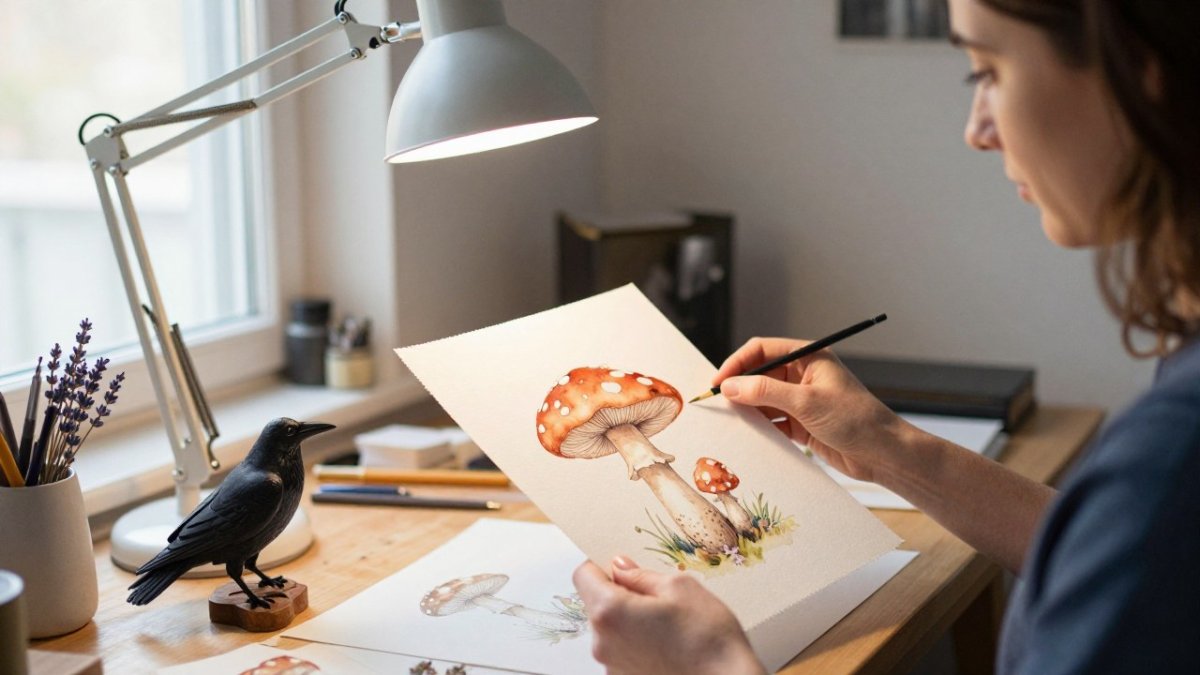
Our own collection leans toward original watercolor, including a bumblebee and coneflower art print that pairs a pollinator subject with a meadow palette, and an original bunny family watercolor that suits a cottage core shelf or nursery wall.
If you are unsure how to hang them, our guide on displaying botanical insect art prints walks through spacing and shelf styling.
Animal Kitchen Decor With a Purpose
Kitchen decor usually gets treated as an afterthought, which is a missed opportunity. Animal kitchen decor works best when it is functional: a bird-motif trivet, a wildlife-print tea towel, a ceramic jar with a hare lid.
A useful rule is one motif per surface. A single animal accent on an open shelf reads as intentional. Five of them read as a theme park.
Natural materials earn their place here too. Wood, ceramic, linen, and glass age well in a kitchen.
Wildlife Figurines and Sculptural Accents
Wildlife figurines are where sourcing gets tricky, and most buying guides skip straight past it.
Ceramic, carved wood, cast metal, and stone are generally more durable than resin, and well-made ceramic pieces can often be repaired.
Place figurines in odd-numbered groups of three or five, vary the heights, and keep them off the same shelf as your framed art. Sculptural accents need breathing room to read as objects rather than clutter.
How to Judge Ethical and Sustainable Sourcing
Ethical sourcing claims are easy to print and hard to verify, so the work is in asking specific questions before you buy. Our guide to eco friendly home decor certifications explained covers which certifications actually mean something and which are marketing language. The section below goes further: it explains what to look for in each material category and how to judge a product's full lifecycle, not just its label.
Start With the Material, Not the Label
"Sustainable" and "eco-friendly" are not regulated terms in home decor, so a listing can use them with no verification behind them. Ask for the material and the maker instead. A specific material name is a claim you can check; a vague adjective is not.
Use this checklist when evaluating any wildlife-themed piece:
Does the listing name the material, not just "eco-friendly"?
Is the artist or maker named, with a portfolio or process shown?
Are animal products absent, including bone, shell, ivory, fur, and feathers?
Material-by-Material Trade-Offs
The material question often matters more than any single certification, because each material carries a different set of wildlife and environmental trade-offs.
Reclaimed and salvaged wood: Often the lowest-impact choice because it avoids new logging, but finishes and paints may contain volatile organic compounds (VOCs). Ask what finish was used and whether it is water-based.
FSC-certified wood: The Forest Stewardship Council certification is one of the more recognizable chain-of-custody standards for wood products. It does not guarantee zero impact, but it does require traceability from forest to finished product.
Ceramic and stoneware: Durable and repairable, but glazes can contain lead or cadmium. Look for food-safe or lead-free glaze disclosures, especially on mugs, bowls, and kitchen pieces.
Watch out: a product can be both "natural" and harmful. Bone, shell, ivory, and fur are natural materials, and they are exactly what a wildlife-friendly purchase should avoid.
Judge the Lifecycle, Not Just the Purchase
Product-focused pages usually stop at the point of sale. The friendlier question is what happens after the piece comes home.
Durability: A well-made ceramic or cast-metal piece can last decades and be repaired; a resin figurine usually cannot. Longevity is one of the most reliable sustainability signals because it reduces replacement and waste.
Repair and reuse: Ask whether replacement parts, hardware, or refinishing services are available. A frame that can be re-matted or a lamp that can be rewired stays out of the waste stream.
Disposal: Natural fibers, untreated wood, and unglazed ceramic break down more readily than composite plastics. If a piece cannot be recycled or composted, plan for a long service life instead.
A Practical Buying Sequence
When you are comparing two similar pieces, run them through the same short sequence:
Name the material and the maker.
Confirm no animal products are present.
Check for a traceable origin or a recognized certification.
Ask about finish, glaze, and dye disclosures.
Estimate the service life and whether it can be repaired.
Compare the price against that service life, not against the cheapest listing.
That sequence takes a few minutes and will filter out most of the products that use wildlife imagery without supporting wildlife.
Each material carries its own wildlife and environmental trade-offs, so compare them before you buy.
Material | Key trade-off | What to check |
Reclaimed and salvaged wood | Avoids new logging; finishes may contain VOCs | Ask about water-based finish |
FSC-certified wood | Requires traceability from forest to product | Recognized chain-of-custody standard |
Ceramic and stoneware | Durable and repairable; glazes may contain lead or cadmium | Look for lead-free glaze disclosures |
Cast metal and brass | Long-lived and recyclable; plating wears through | Ask whether solid or plated |
Natural fiber rugs (jute, wool, cotton) | Biodegradable and durable; wool sourcing varies widely | Look for recycled wool or a named mill |
Recycled and reclaimed textiles | Diverts waste; processing may be high-toxicity | Check dye and finish disclosures |
Resin and plastic | Cheap, mass-produced, least repairable | Treat as disposable and price accordingly |
Small-Space and Renter-Friendly Wildlife Decor
Renters and small-space dwellers face a specific constraint: no holes in the wall, no permanent changes, and often shared or multi-use rooms. The workaround is to move wildlife decor onto surfaces and textiles instead of drywall, and to choose pieces that survive real households.
Low-Commitment Placement
Leaning frames on a shelf or mantel instead of hanging
Peel-and-stick hanging strips for lightweight prints (check the weight rating; most strips are rated for a few pounds, not a framed canvas)
Accent pillows and decorative throws for instant animal motifs
Small spaces also benefit from fewer, larger pieces. One framed wildlife artwork above a desk does more than six small prints scattered across a studio apartment. Scale the piece to the wall it sits against, not to the size of the room.
Household Suitability: Pets, Kids, and Allergies
A wildlife-friendly home is also a home where the decor does not create problems for the animals and people already living there. Washability and placement often matter more than style in shared households.
Washable fabrics: Pillow covers and throws that can be machine-washed on a gentle cycle hold up better in homes with pets and children. Look for removable covers with hidden zippers rather than spot-clean-only textiles.
Allergy considerations: Wool and natural fibers are durable but can trigger sensitivities in some households. Cotton, linen, and washable synthetic blends are often the safer choice for bedding and upholstered accents.
Pet-safe placement: Keep tabletop figurines and small sculptures above tail height or behind glass. Ceramic and stone pieces are heavier and more stable than resin, which matters in homes with climbing cats or large dogs.
Peel-and-stick products can damage paint or drywall on removal, especially in humid rooms. Test a small strip in an inconspicuous spot first, and follow the manufacturer's removal instructions.
Renter-Friendly Wildlife Decor by Room
Studio or one-bedroom: one leaning framed print, one washable accent pillow, and one tabletop figurine. Keep the palette to two neutrals and one green so the pieces read as a set.
Shared living room: choose textiles over wall pieces, since they are easier to swap and less likely to conflict with a roommate's style. A jute or recycled-wool rug grounds the space without permanent installation.
Bedroom: washable pillow covers and a single framed print above the bed. Avoid hanging anything heavy above a bed in a rental; a leaning frame on a dresser is safer and easier to move.
Budget and Longevity in a Small Space
Small spaces reward quality over quantity. A single well-made ceramic or cast-metal piece will outlast several resin figurines and can be repaired rather than replaced. Set a budget per piece rather than per room, and prioritize the items you will look at daily: the wall opposite the sofa, the bedside surface, and the entryway shelf. Those three spots carry most of the visual weight in a small home, and they are the easiest to update when you move.
Choosing Your First Wildlife Friendly Piece
Start with the piece you will look at most.
Match the subject to your region if you can. Native species carry more meaning than a generic safari print, and they connect the room to the landscape outside it.
Then set a rule for everything that follows: if you cannot name the material and the maker, keep looking.
Most decor shopping rewards speed, and wildlife-friendly shopping rewards patience.
Frequently Asked Questions
What makes home decor wildlife friendly?
Wildlife friendly decor combines two things: animal and nature motifs that celebrate the natural world, and sourcing that avoids harming it. Original artwork rather than mass-produced prints, and natural materials like wood, linen, and ceramic, are good signs to look for. Ask the seller directly where materials come from and whether any proceeds go to habitat or species work. A piece that looks nature-themed but comes from unclear overseas mass production is not wildlife friendly in any meaningful sense.
How do I add wildlife wall decor without making a room feel cluttered?
Pick one focal wall and keep the rest of the room quiet. A single large wildlife artwork or a tight grid of three to five framed prints reads as a statement piece rather than clutter. Keep frame finishes consistent, such as all walnut or all black, and leave at least 5 centimeters of breathing room between frames. Pair the wall with subtle accents like one textured throw or a pair of wildlife figurines on a shelf, then stop. The 3-5-7 rule helps here: group items in odd numbers and vary their heights.
Which natural materials and colors create a wildlife-inspired interior?
Start with earthy tones: forest green, warm neutrals, camel, walnut, rust, and muted blue. These echo woodland, meadow, and water scenes without turning a room into a themed cabin. For materials, choose solid wood frames, linen and cotton textiles, stoneware ceramics, and wool rugs. Organic textures matter as much as color, so mix a smooth ceramic figurine against a woven basket or a rough linen pillow. Original watercolor artwork fits this palette naturally because the pigments already sit in those muted ranges.
How can I choose wildlife decor that reflects a conservation-minded lifestyle?
Buy fewer, better pieces and verify the maker. Check whether the artist publishes original work, shows a portfolio, and explains their materials. Independent artists who illustrate native or endangered species usually say so openly. Ask about packaging, whether plastics are avoided, and whether the studio donates to conservation or environmental education. Renter-friendly options like framed prints and removable wall hooks also extend a piece's life across moves, which keeps it out of landfill and is its own form of sustainability.


Comments