
Best Cottagecore Aesthetic Clothing Brands
Table of Contents
What Defines Cottagecore Aesthetic Clothing
Cottagecore Dresses: Romantic Silhouettes and Timeless Pieces
Sustainable Cottagecore Brands: Ethical Craftsmanship and Natural Fabrics
A Practical Sustainability Checklist
Natural Fabrics: What Each One Actually Does
Reading Sustainability Claims Critically
Handmade Details as a Sustainability Signal
Questions Worth Asking a Maker
Affordable Cottagecore Clothes: Quality Without the Premium Price
What Cottagecore Pieces Actually Cost
Where the Money Goes
Secondhand and Vintage: The Biggest Savings Lever
Cost-Per-Wear Math
Affordable Doesn't Mean Compromised
Plus-Size Cottagecore Clothing: Inclusive Sizing and Extended Options
Independent Artists and Handmade Cottagecore Pieces
How to Choose and Style Your Cottagecore Wardrobe
Frequently Asked Questions
Last Updated: October 18, 2026
What Defines Cottagecore Aesthetic Clothing
Core elements include soft, flowing fabrics like linen and cotton, earthy color palettes, delicate embroidery, lace, and romantic touches like puff sleeves and ruffles.
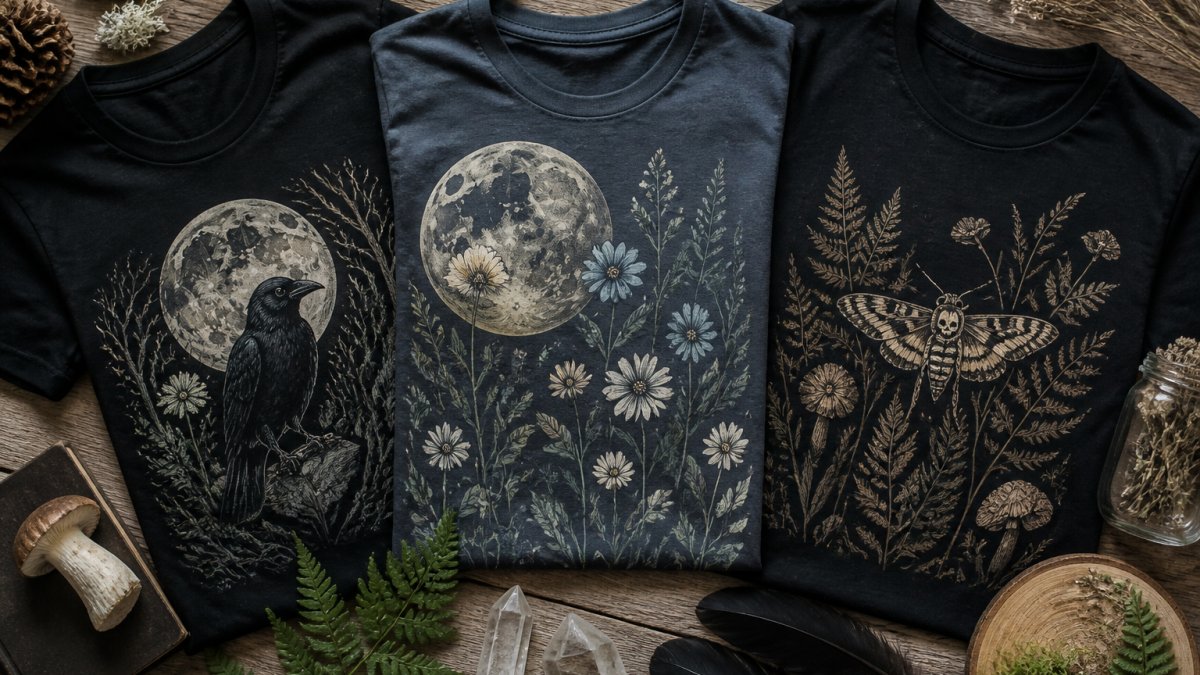
At Heather Dorsch Creations, cottagecore aesthetic clothing represents more than a trend, it's a lifestyle choice reflecting sustainability, artistry, and connection to nature. Our witchy, nature-themed apparel combines dark academia and cottage core elements through original watercolor illustrations.
What sets this aesthetic apart is its rejection of mass production: enthusiasts seek out independent artists, sustainable brands, and handmade pieces, celebrating slow fashion and genuine artistry.
Cottagecore Dresses: Romantic Silhouettes and Timeless Pieces
The heart of any cottagecore aesthetic clothing wardrobe is the dress. Look for flowing silhouettes, natural fabrics, and romantic details, A-line cuts, empire waistlines, and full skirts that move rather than cling.

Puff sleeves remain a signature element, evoking historical romance while flattering most arm shapes.
Prioritize natural fabrics that age well: linen develops character, cotton breathes in warm weather, and wool blends provide structure, garments you'll wear for years, not seasons.
Quality construction matters: look for reinforced seams, finished hems, and thoughtful pattern placement. A well-made cottagecore dress becomes a wardrobe staple that mixes easily and layers across seasons.
Sustainable Cottagecore Brands: Ethical Craftsmanship and Natural Fabrics
Sustainability and cottagecore philosophy align naturally, but "sustainable" is one of fashion marketing's most loosely used words. The useful skill is knowing what to check, and what evidence backs a claim.
A Practical Sustainability Checklist
Use these five criteria to evaluate any cottagecore brand before buying:
Fiber content, stated plainly. Look for named fibers, linen, organic cotton, hemp, wool, silk, Tencel (lyocell), rather than vague terms like "eco-blend." If a listing won't name the fiber, assume a synthetic blend.
Production location and scale. Small-batch production in a named studio is easier to verify than an unnamed overseas factory. Made-to-order models reduce deadstock because garments are cut after purchase.
Labor disclosure. Does the brand say who makes the clothes and where? A single-person studio, a small team, or a named partner workshop are all more traceable than silence.
Dye and finish methods. Natural dyes, low-impact fiber-reactive dyes, and undyed natural fabrics reduce water and chemical load. Ask whether prints are screen-printed, digitally printed, or hand-painted.
Third-party certifications where they exist. Recognized certifications, GOTS for organic cotton, OEKO-TEX Standard 100 for harmful-substance testing, Fair Trade Certified for labor, and bluesign for textile production, are verifiable through the certifying body, not just the brand's website.
Natural Fabrics: What Each One Actually Does
Fabric | Strengths | Trade-offs |
Linen | Breathable, strong when wet, softens with age | Wrinkles easily; can shrink unless pre-washed |
Organic cotton | Soft, versatile, widely certified (GOTS) | Water-intensive to grow even organically |
Hemp | Durable, low-input crop, UV-resistant | Can feel stiff until broken in |
Wool | Warm, odor-resistant, holds shape | Needs careful washing; can felt |
Tencel (lyocell) | Drapes well, closed-loop production | Less established supply-chain transparency |
Small makers often build a core line around linen and cotton, using wool for cold-weather layering, covering most cottagecore silhouettes while keeping fiber sourcing simple to disclose.
Reading Sustainability Claims Critically
Watch for these red flags:
"Eco-friendly" with no specifics. Without a fiber, certification, or process named, the term is unverifiable.
Certification logos without numbers. GOTS and OEKO-TEX certificates carry license or certificate numbers that can be checked with the certifying body.
Charitable giving used as a stand-in for production standards. Donating a portion of proceeds is admirable, but it doesn't tell you how the garment was made.
"Sustainable" collections inside fast-fashion lines. A capsule of organic-cotton pieces doesn't change the volume model of the broader business.
Handmade Details as a Sustainability Signal
Embroidery, crochet, hand-dyeing, and hand-finishing require time and skill, correlating with smaller production runs, less waste, and garments easier to repair. Process photos, the studio, the fabric bolt, the embroidery in progress, signal more than a badge.
Questions Worth Asking a Maker
A short, polite message to an independent seller usually gets a straight answer:
What is the exact fiber content of this piece?
Where was the fabric sourced, and where is the garment sewn?
Are custom sizes made to order, and what is the lead time?
How should I wash this to make it last?
Do you offer repairs or alterations?
Makers who answer specifically usually have practices worth supporting; vague or defensive answers are a useful signal too.
Watch Out Certifications verify specific claims, organic fiber content, harmful-substance limits, or labor standards, not a brand's overall environmental impact. Treat any single badge as one data point, not a complete sustainability verdict.
Key Takeaway The most reliable sustainability signal in cottagecore clothing is specificity: named fibers, named production locations, verifiable certificate numbers, and makers who answer questions directly. Use the five-point checklist and the fiber table above to compare brands on evidence rather than marketing language.
Affordable Cottagecore Clothes: Quality Without the Premium Price
Cottagecore aesthetic clothing doesn't require unlimited spending, but "affordable" means very different things depending on where you shop. A transparent price map is the fastest way to shop without overpaying.
What Cottagecore Pieces Actually Cost
Prices vary widely by production method and material. Based on common listings across independent maker platforms and resale sites, here's a realistic range to budget against:
Piece | Mass-Retail Range | Independent Maker Range | Vintage/Secondhand Range |
Day dress (cotton or linen blend) | $40-$90 | $120-$280 | $25-$75 |
Blouse with embroidery or lace | $25-$55 | $65-$150 | $15-$45 |
Midi or maxi skirt | $30-$70 | $80-$180 | $20-$60 |
Cardigan or knit shawl | $35-$80 | $90-$200 | $20-$55 |
Apron or pinafore | $20-$50 | $55-$120 | $10-$40 |
Accessories (brooch, hair ribbon, bag) | $10-$35 | $25-$85 | $5-$30 |
These ranges reflect typical U.S. pricing; custom sizing, hand-dyeing, and original artwork push pieces toward the top of the maker range. Treat them as planning anchors, not quotes, always confirm pricing with the seller.
Where the Money Goes
A $180 independent dress and a $60 mass-retail dress can look similar in photos. The difference is usually fabric weight and fiber content, construction time (French seams and hand-finished hems add hours), and the maker's cut after platform fees. Etsy sellers pay listing and transaction fees, one reason direct-to-maker storefronts can price lower.
Secondhand and Vintage: The Biggest Savings Lever
Thrift stores, estate sales, vintage markets, and online resale platforms stretch cottagecore budgets furthest. A few practical patterns:
Search by fabric, not by trend. Queries like "linen midi dress," "cotton prairie blouse," and "wool cardigan" surface better vintage candidates than "cottagecore."
Check fiber tags before buying. Vintage pieces labeled 100% cotton, linen, or wool usually outlast contemporary fast-fashion equivalents.
Budget for alterations. A $30 vintage dress plus $40 in tailoring often beats a $150 new dress on fit and longevity.
Inspect for flaws that matter. Underarm discoloration, shrunken wool, and brittle elastic are usually not worth repairing; loose seams and missing buttons are.
Cost-Per-Wear Math
Divide price by estimated wears. A $200 linen dress worn twice a week for two seasons (roughly 50 wears) lands near $4 per wear; a $50 fast-fashion dress worn five times costs $10 per wear. The independent piece wins on cost-per-wear even at four times the sticker price, provided the fabric and construction hold up.
Affordable Doesn't Mean Compromised
Three habits keep budgets in check without sacrificing the aesthetic:
Buy core pieces new, accents secondhand. Invest in one well-made dress or skirt; fill in blouses, aprons, and accessories from resale.
Watch for made-to-order lead times. Many independent makers produce on demand, which lowers waste but means you should plan purchases a few weeks ahead rather than expecting instant shipping.
Ask about sales and seconds. Small makers often list sample pieces, slight seconds, or end-of-bolt fabrics at reduced prices, worth asking about directly.
Pro Tip Before buying, confirm the seller's return window and whether custom or made-to-order items are final sale. Independent shops frequently cannot accept returns on personalized pieces, so measure carefully first.
Key Takeaway Affordability in cottagecore comes from matching the price tier to the piece: spend on one or two well-constructed natural-fiber staples, then fill the rest of the wardrobe through vintage and resale. A written price range and a cost-per-wear check prevent impulse buys that undercut the slow-fashion ethos.
Plus-Size Cottagecore Clothing: Inclusive Sizing and Extended Options
Cottagecore aesthetic clothing should be accessible to everyone. Extended sizing in XS through 4X ensures that all body types can embrace the aesthetic.
Many independent cottagecore aesthetic clothing makers offer inclusive sizing as standard rather than afterthought.
Fit matters more than size: a well-fitting cottagecore dress in size 2X worn by someone who typically wears size 8 looks intentional and beautiful.
When shopping plus-size cottagecore pieces, prioritize makers who showcase extended sizes in photos and provide detailed measurements.
Independent Artists and Handmade Cottagecore Pieces
Handmade cottagecore aesthetic clothing carries unique value mass production cannot replicate: each piece reflects an artist's vision, technique, and care.
Handmade pieces often feature superior materials and construction. Artists invest in quality fabrics and techniques because their reputation depends on durability. A hand-embroidered cottagecore dress becomes heirloom-quality, something to wear for decades and pass along.
Original artwork transforms cottagecore aesthetic clothing from costume into personal expression.
Heather Dorsch Creations exemplifies this approach, each piece features original watercolor artwork celebrating nature and dark academia aesthetics.
How to Choose and Style Your Cottagecore Wardrobe
Building a cottagecore aesthetic clothing wardrobe starts with defining your personal interpretation: whimsical and light, or darker academia-inspired tones?
Begin with foundational pieces: a quality linen dress, a cream or sage-colored blouse, and a cardigan or shawl.
Accessories elevate cottagecore aesthetic clothing significantly. Vintage brooches, delicate jewelry, and nature-inspired pieces ground the look.
Consider your lifestyle when choosing pieces. Cottagecore aesthetic clothing works for work, casual outings, and creative pursuits when selected appropriately.
Quality over quantity ensures your cottagecore wardrobe remains cohesive and sustainable.
Building an authentic cottagecore aesthetic clothing wardrobe using the best cottagecore aesthetic clothing brands means prioritizing handmade quality, natural fabrics, and artistic integrity over trends. Shop our collection of nature-themed apparel and accessories.
Element | Characteristics | Best For |
Cottagecore Dresses | Flowing silhouettes, puff sleeves, natural fabrics | Romantic, timeless everyday wear |
Sustainable Brands | Organic materials, ethical production, transparent sourcing | Environmentally conscious buyers |
Independent Artists | Handmade details, original artwork, custom options | Unique, heirloom-quality pieces |
Vintage & Secondhand | Authentic historical pieces, superior construction | Budget-conscious, sustainability-focused shoppers |
Plus-Size Options | XS-4X inclusive sizing, proportioned cuts | All body types and comfort preferences |
Pro Tip When shopping for cottagecore aesthetic clothing, prioritize makers who clearly showcase their extended sizes in actual photos rather than just listing them. This transparency signals confidence in their sizing and prevents fit disappointment.
Key Takeaway The best cottagecore aesthetic clothing combines natural fabrics, handmade craftsmanship, and artistic vision, qualities found in independent makers rather than mass retailers. Supporting these creators funds artistic practice while building a wardrobe of genuinely timeless pieces.
Frequently Asked Questions
What should I look for when choosing a cottagecore clothing brand?
Look for brands that prioritize natural fabrics like linen and cotton, feature romantic silhouettes with details like puff sleeves and ruffles, and offer transparent information about their production methods. Check whether the brand provides clear product descriptions, size charts, and return policies. Verify that designs reflect genuine cottagecore aesthetic values, whimsical and pastoral rather than generic vintage. Independent artists and smaller brands often provide more detailed craftsmanship information and custom options than mass producers.
Where can I find affordable cottagecore clothes without sacrificing quality?
Affordable cottagecore clothes are available through independent artists on platforms that support handmade goods, vintage marketplaces for authentic secondhand pieces, and smaller ethical brands that prioritize slow fashion over mass production. Look for seasonal sales, bundle options, and brands that offer extended sizing to maximize value. Many emerging cottagecore designers operate with lower overhead than established retailers. Check customer reviews for durability and fit before purchasing to ensure affordability doesn't mean compromised quality.
Do cottagecore brands offer plus-size and extended sizing options?
Many contemporary cottagecore brands now recognize the demand for inclusive sizing and offer XS through 4X or beyond. Independent artists and smaller ethical brands tend to be more size-inclusive than traditional retailers because they often produce custom or made-to-order pieces. When shopping, verify the specific size range each brand offers, some label sizing differently. Look for brands that showcase plus-size models wearing their designs so you can see how pieces fit and drape on different body types before ordering.
How do I know if a cottagecore brand is actually sustainable and ethical?
Verify sustainability claims by checking whether brands disclose their production methods, material sourcing, and labor practices on their websites. Look for certifications from recognized ethical fashion organizations or transparency reports. Brands that support environmental causes or conservation efforts typically provide details about their contributions. Independent artists often have more verifiable sustainability practices because they control the entire production process. Be cautious of vague language like 'eco-friendly' without specific details, authentic sustainable brands explain exactly what makes their practices ethical.
Shop
Comments