
9 Whimsical Cottagecore Home Decor Ideas for Every Room
Last Updated: October 28, 2026
Quick Summary
Whimsical cottagecore home decor works best when a palette of three to five warm, earthy tones repeats across textiles, walls and small objects. Start with a warm neutral base, one main color, one accent and one pattern, then layer vintage linens, natural materials and a few whimsical pieces such as mushroom lamps or botanical prints.
Use a 60-30-10 rule: roughly 60 percent neutral, 30 percent main color, 10 percent whimsical accent.
Limit whimsical pieces to two or three per room so each one stands out.
Use one pattern no more than twice in a room, such as a floral, gingham or botanical print.
Press flowers between heavy books for two to three weeks before framing them behind glass.
Test paint chips or fabric swatches under warm lamp light, since colors shift noticeably after dark.
Table of Contents
Whimsical cottagecore home decor ideas work best when the colors hold the room together.
The cottagecore palette leans toward warm, earthy and slightly faded colors. To see how these tones translate into wearable pieces, you can browse cottagecore clothing brands and their styling ideas. Think sage, butter yellow, dusty rose, oatmeal and deep moss green.
Watch out: pulling too many saturated colors into one room is the most common mistake. Cottagecore reads as lived-in and soft. If three bright hues compete for attention, the room looks like a craft fair rather than a cottage.
Here is a practical starting formula you can test with paint chips or fabric swatches:
Base: warm white or oatmeal for walls and large furniture
Main color: sage, moss or dusty blue for one major element, such as a rug or curtains
Accent: butter yellow or dusty rose for cushions, vases or lampshades
Pattern: one small-scale floral, gingham or botanical print, used no more than twice in a room
Metal or wood tone: brass or aged wood to tie the warm colors together
Test your palette before committing. For help coordinating colors across each room, see this room-by-room color matching guide. Lay swatches next to your existing bedding or sofa in daylight, then again under warm lamp light, since color shifts noticeably after dark.
Once the palette is set, the rest of the decor becomes a matter of layering. For more nature-inspired ideas for each room, read this nature-inspired home decor guide.
1. Layer Vintage Linens and Handmade Quilts
Vintage linens are the fastest route to a convincing cottagecore look. Embroidered pillowcases, gingham tablecloths and hand-stitched quilts carry the visible history that new décor cannot fake. Layering two or three of these textiles on a bed or sofa creates depth in a single afternoon.

Start with one quilt as the anchor, then add smaller pieces in complementary patterns. Mix a floral pillowcase with a plain linen throw and a gingham runner, keeping the palette you chose earlier. The variety reads as collected, not matching.
Many shoppers find that secondhand shops and estate sales offer the best value for older linens. Check for fraying at stress points and inspect embroidery for loose threads before you buy.
The article's key guidance on layering textiles and buying older linens comes down to a few points worth comparing at a glance.
Textile | Role in the room | Check before buying |
Quilt | Anchor piece | Fraying at stress points |
Floral pillowcase | Complementary pattern | Loose embroidery threads |
Plain linen throw | Texture and contrast | Fraying at stress points |
Gingham runner | Repeats the palette | Loose embroidery threads |
2. Whimsical Cottagecore Bedroom Decor: Mushrooms, Florals and Soft Textiles
The bedroom is where whimsy works best, because it is the most personal room in the house. Mushroom-shaped lamps, botanical wall art and a fabric canopy or sheer curtains set the tone without overwhelming the space. We suggest limiting whimsical pieces to two or three per room so each one stands out.
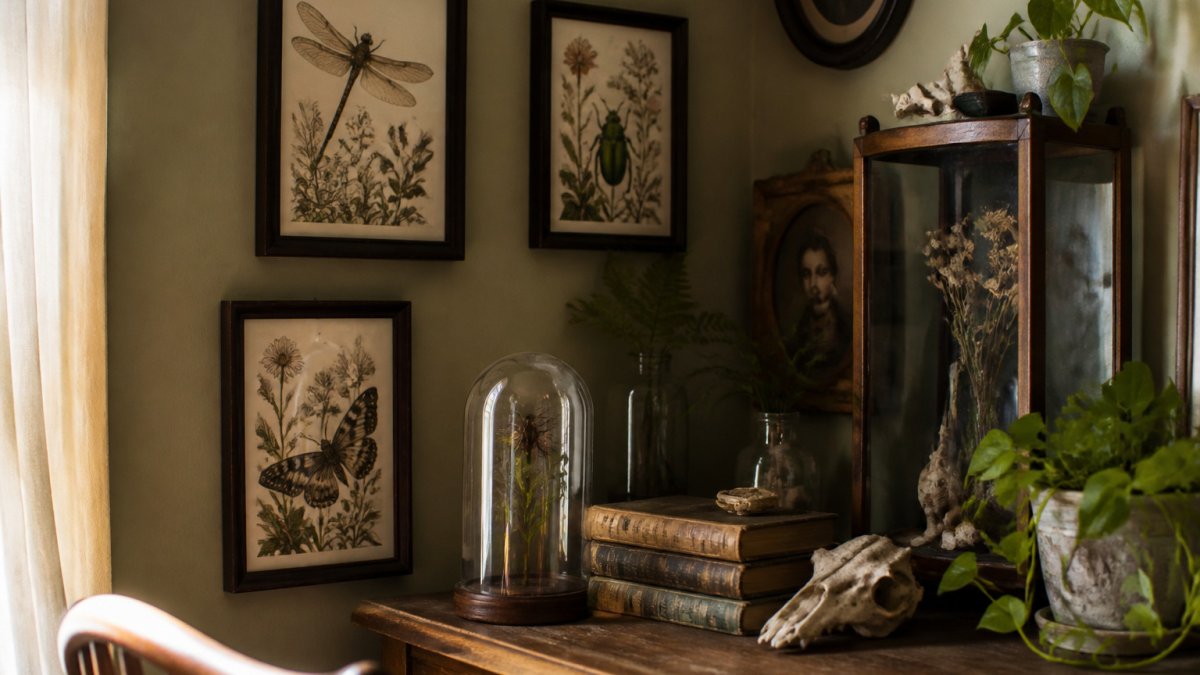
Framed art prints are a practical choice here. Look for botanical or fantasy-inspired prints in black or rustic wood frames that match your existing furniture. The Gothic Coffin art prints by Heather Dorsch bring a moody, vintage-inspired touch to a bedroom wall, and mushroom and floral motifs suit the cottage mood.
Keep the bed layered but not crowded. Two pillows in a coordinated print, one knit throw and a single textured quilt is usually enough.
3. Cottagecore Living Room Ideas With Natural Materials
Living rooms benefit from natural materials: rattan or wicker seating, a jute rug, pottery on a side table and wood tones throughout. These textures ground the whimsical elements so the room feels relaxed rather than themed.
The Design Lounge
Statement wall art does much of the work in a living room. A large framed and matted art print in a black or rustic wood frame gives the room a focal point without requiring a full gallery wall. Pair it with warm lamp light, ideally 2700K bulbs, to keep the mood soft after sunset.
Plants complete the look. Trailing pothos, a fern or a few dried stems in a ceramic vase add greenery that suits the cottage aesthetic.
4. DIY Cottagecore Decor You Can Make This Weekend
Handmade pieces are central to the cottagecore look, and many can be made in an afternoon. Painted terracotta pots, embroidered tea towels, pressed flower frames and dried herb bundles are all beginner-friendly projects that need only basic supplies.
Pressed flower art is a good first project. Press flowers between heavy books for two to three weeks, then arrange them behind glass in a thrifted frame. Use acid-free paper backing to protect the blooms over time.
For painted pots, sand the surface lightly, apply a primer suited to the material and finish with a matte sealant. The result looks handmade without requiring advanced skills.
5. Room-by-Room Plan and Small-Space Adaptations
A room-by-room plan keeps the look coherent across the whole home instead of turning each space into its own themed island.
Living room (start here). This room sets the palette for everything else.
Bedroom. Layer one quilt, two coordinated print pillows, and a knit throw. A sheer canopy or curtain panel softens the window without blocking light. Limit whimsical pieces to two or three so each one reads as intentional.
Kitchen. Open shelving, ceramic jars with wooden lids, a gingham or linen runner, and one painted cabinet door or open shelf edge in sage or moss. Dried herb bundles hung near the stove add scent and texture.
Bathroom. One linen hand towel, a small potted fern or trailing pothos, a thrifted framed print, and a ceramic soap dish.
Entryway. A woven basket for keys and mail, a small vintage mirror, and a single dried-stem vase. The entryway is a transition space, so it should preview the palette rather than compete with the living room.
Budget tiers and sourcing alternatives
A coordinated plan works at three spending levels. Treat these as relative tiers rather than fixed prices, since thrift and estate-sale inventory changes constantly.
Low budget (thrift and DIY first): estate-sale linens, thrifted frames repainted in matte black or warm white, DIY pressed-flower art, painted terracotta pots, and dried stems from a grocery store bouquet. Most of the look can be assembled from secondhand and handmade pieces.
Mid budget (one or two new anchors): a new jute rug, a quality linen duvet cover, a rattan side table, and a framed art print. Buy the rug and the art first, because they carry the most visual weight per dollar.
Higher budget (investment pieces): a handmade quilt, an original watercolor or signed print, a solid wood side table, and a quality wool rug. These are the pieces that last and that the rest of the room can be built around later.
A practical sourcing order is: rug, then art, then textiles, then small objects. Rugs and art set the palette and scale; textiles add softness; small objects are the last 10 percent and the easiest to change.
Small-space and renter-friendly adaptations
Renters and small-space dwellers can get the full look without losing a security deposit. Use removable adhesive hooks and strips instead of nails for lightweight art and dried bundles. Choose plug-in wall sconces and string lights rather than hardwired fixtures, and use tension rods for curtains in rentals where drilling is not allowed. Lightweight, washable rugs and textiles are easier to move and easier to clean. For small rooms, go vertical: a leaning ladder shelf, a wall-mounted shelf above a desk, and a single large print instead of a gallery wall, since one big piece reads calmer in a tight space than many small ones. Store off-season textiles in a lidded basket so the visible layer stays edited.
6. Balancing Whimsy With Everyday Function
Whimsy should never make a room hard to live in, and the difference between a styled cottage and a cluttered one is usually maintenance, not taste. The practical test is simple: every whimsical piece should either do a job (light, storage, holding a plant) or be easy to clean and move. Decorative-only objects are fine, but keep them to a small number per room so the eye has somewhere to rest.
Make whimsy functional
Lighting: a mushroom or floral lamp is charming only if the switch and bulb are reachable. Choose lamps with a standard base so replacement bulbs are easy to find, and keep a spare bulb on hand.
Textiles: put washable cottons and linen blends on sofas, dining chairs, and anything a pet or child uses. Reserve delicate vintage embroidery and hand-stitched quilts for beds and low-traffic walls, and use a washable throw over them where hands and paws land.
Display: open shelving and wall hooks let decorative objects double as storage. Baskets, ceramic jars, and lidded boxes hold everyday items while carrying the cottage look.
Traffic paths: keep at least a comfortable walking width clear in hallways and around furniture, and avoid trailing plants or floor baskets in doorways where they will be knocked over.
Care and cleaning routines
A short routine keeps the look from sliding into shabbiness. Dust open shelves and framed art, fluff pillows and throws, and rotate plants toward the light.
Seasonal swaps
Seasonal updates are where cottagecore stays fresh without a full redecorating budget.
Pro Tip Before buying any whimsical piece, ask three questions: Can I clean it? Can I move it when I rearrange? Does it do a job? If the answer to all three is no, it is a display-only object, and those should stay limited.
Choose Your First Piece and Shop Heather Dorsch Creations
Start with one piece rather than a full overhaul. Choose the palette, then add one textile, one whimsical accent and one piece of statement art. That approach keeps costs manageable and lets you judge how each element looks in your actual space.
At Heather Dorsch Creations, original watercolor artwork celebrates the natural world. Browse the collection and find the piece that fits your palette. Shop Heather Dorsch Creations today.
Frequently Asked Questions
How do you make a home look cottagecore?
Start with natural materials like wood, rattan and wicker, then layer vintage linens, handmade quilts and soft florals. Add plants, warm lamp light and a few collected pieces such as antique dishes or framed botanical prints. Keep surfaces lived-in rather than perfectly styled, since the look depends on texture and gentle imperfection. Most homes can achieve a convincing cottagecore feel by updating textiles, lighting and a handful of accents without replacing furniture.
What colors work best for a cottagecore color palette?
Soft, earthy tones work best: cream, sage green, dusty rose, warm ochre and muted brown. Accent with small touches of deep plum or forest green for a moodier, whimsical look. Keep the base neutral so florals and mushroom motifs stand out. A consistent palette across textiles, wall art and lighting makes a room feel cohesive instead of cluttered, which is the main reason a cottagecore palette reads as intentional.
How can I make a whimsical cottagecore bedroom feel cozy?
Combine a layered bed with a quilt, decorative pillows and vintage linens in complementary florals or gingham. Add warm bedside lamps and a lampshade with a soft fabric finish. Hang botanical or mushroom wall art, and place a plant or a small bunch of dried flowers on the dresser. Keep the bedroom functional by choosing storage like a wicker basket or painted chest, so whimsical pieces do not crowd your daily routine.
What are affordable ways to try cottagecore decor?
Start with secondhand finds: vintage linens, ceramic pitchers, wooden frames and thrifted textiles often cost little. Swap in candles, a few potted plants and a new throw blanket before buying larger furniture. Prices vary widely by seller, quantity and condition. Small, repeated accents usually create more impact than one expensive piece.

Comments