
How to Mix Macabre and Cottagecore at Home
Last Updated: November 2, 2026
Quick Summary
Macabre and cottagecore decor combines soft rustic warmth, like aged wood, linen, dried herbs, and candlelight, with darker accents such as skulls, moths, and crows. Build the cozy base first, then add one or two dark focal pieces so the room feels mysterious rather than gloomy.
Build the cottagecore base first, before adding any macabre pieces.
Use a palette of about 60% deep neutrals, 20% textiles, 10% metal accents, and 10% dark focal pieces.
Use two or three warm light sources at different heights to prevent a gloomy feel.
Hang the main focal piece with its center about 57 to 60 inches from the floor.
Limit dark objects to three in any single view, and check the species and origin of any natural specimen before buying.
Table of Contents
Dark cottagecore takes the soft, rustic warmth of a country cottage and adds a shadowy edge: skulls, moths, dried bones, and moody jewel tones, a blend many call macabre and cottagecore decor. Done well, the mix feels cozy and a little mysterious rather than gloomy. This guide walks through how to bring the look home step by step.
What Dark Cottagecore Decor Looks Like
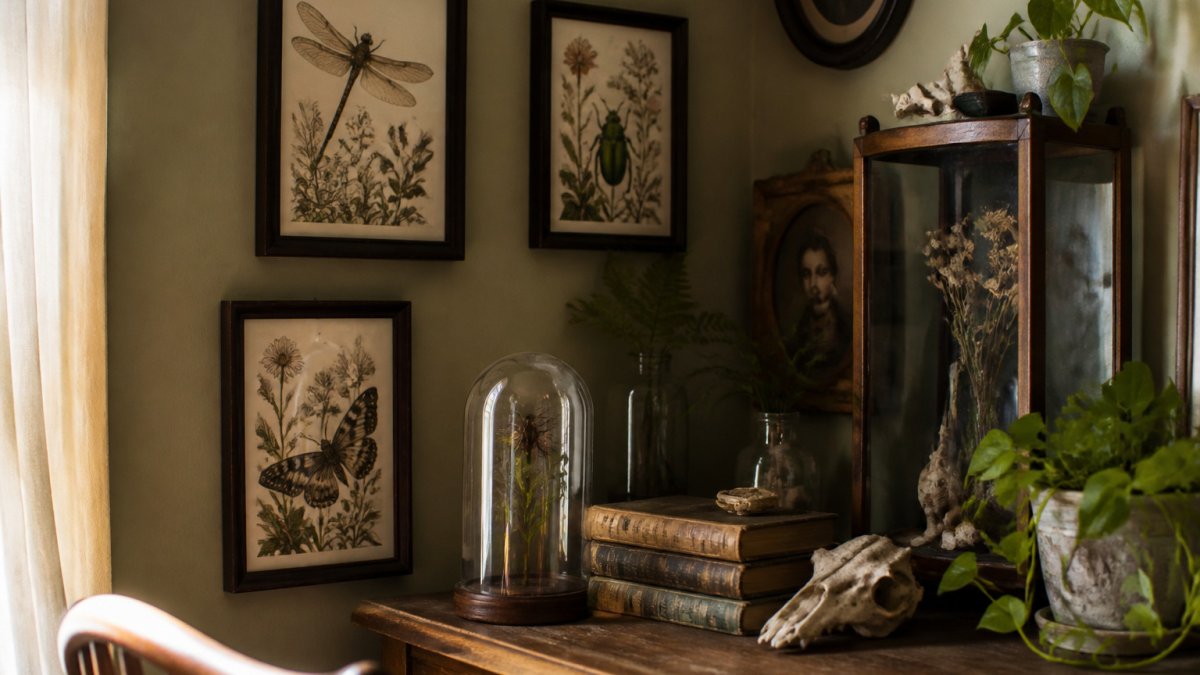
Dark cottagecore is cottagecore with a macabre streak. The base is familiar: aged wood, linen, dried flowers, and candlelight. The difference is the darker accents, such as a death moth, a bird skull, or a pressed fern in a black frame.
The style works because the two moods balance each other. Cottagecore supplies the comfort, and the macabre and cottagecore pairing is completed by the dark details that supply the interest.
Warm, natural materials: aged wood, stone, linen, copper
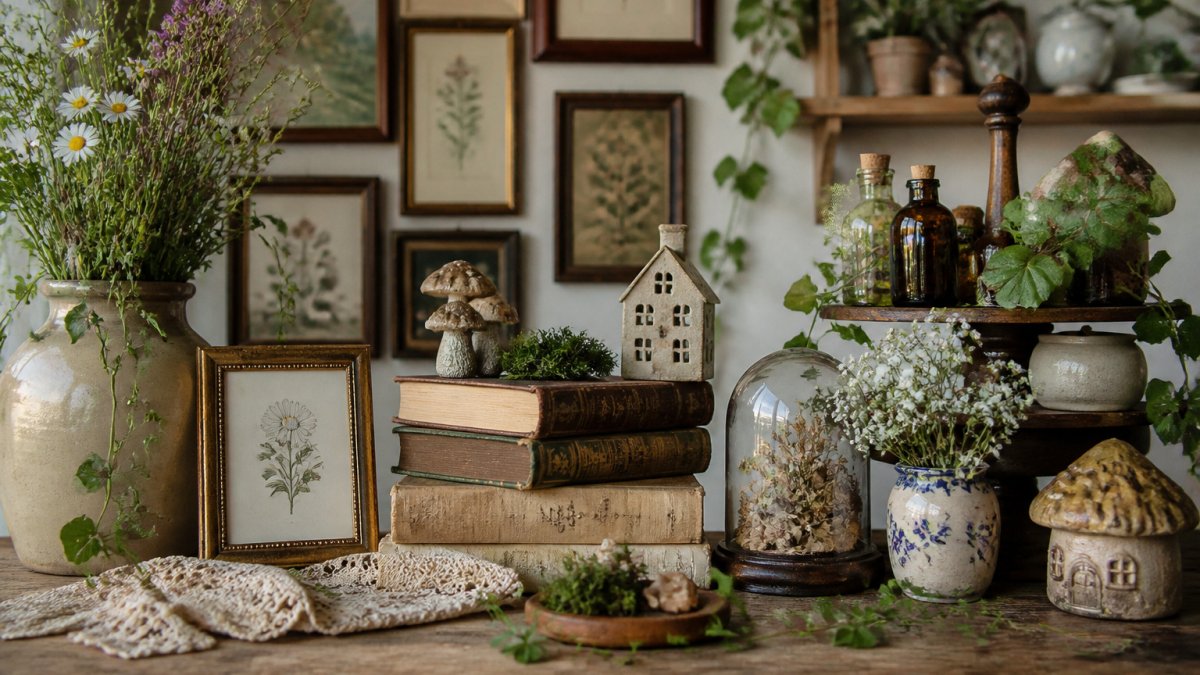
Soft botanicals: dried herbs, pressed flowers, moody florals
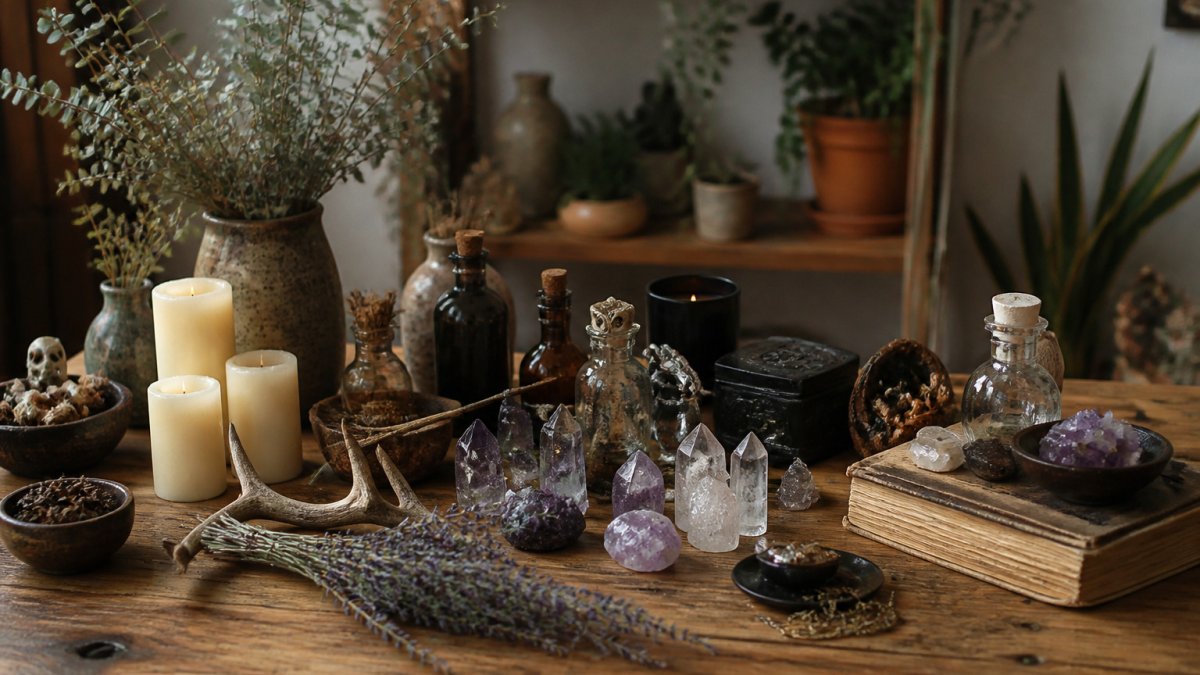
Dark accents: skulls, moths, crows, antique glass
Soft light: candles and low lamps rather than bright overheads
Building a Dark Cottagecore Color Palette
Start with a base of deep, warm neutrals. Dark green, rich brown, and burgundy make up most of the palette. Black works best as an accent, not a wall color, because too much of it makes a room feel closed in.
Add one or two metallic tones. Copper and aged brass catch candlelight and keep dark colors from looking flat. Cream or ivory linen keeps the palette from turning too heavy.
Here is a simple ratio to try:
Element | Share of the Room | Example Colors |
Base walls and large furniture | About 60% | Dark green, deep brown |
Textiles and cushions | About 20% | Burgundy, cream linen |
Metal and light accents | About 10% | Copper, aged brass |
Dark focal pieces | About 10% | Black frames, skull details |
Step-by-Step: Blending Macabre Objects Into Cottagecore Rooms
Most inspiration galleries show a finished dark cottagecore room but skip the process. This is a repeatable method you can apply to any room, in order, without buying everything at once.

Choose the room's anchor first. Pick the one piece the room will be built around: a framed death moth print, a small bird skull under glass, or an antique mirror with a dark frame. Everything else supports that anchor. If you cannot name the anchor in one sentence, you are not ready to shop.
Set the light before the objects. Place two or three warm light sources at different heights (a table lamp, a candle on a low surface, a wall sconce or clip light). Warm bulbs in the 2700K range keep dark colors from reading gray. Objects placed near light look intentional; objects in shadow look like clutter.
Lay the cottagecore base. Add the soft, natural layer first: linen, aged wood, dried herbs, a woven basket, a stoneware vase. This is the 60 percent of the room that supplies comfort. Do this before adding any macabre piece so the dark accents land on warmth rather than on bare walls.
Place the anchor at eye level or just below. A macabre focal piece works best at seated or standing eye level, not high on a wall and not on the floor. Hang framed pieces so the center sits about 57 to 60 inches from the floor, the same rule used for gallery walls.
Echo the anchor's color, not its subject. Repeat burgundy, black, or aged brass in a cushion, a frame, or a candlestick within the same view. Repeating the color ties the room together; repeating the skull or moth makes it a theme room.
Add one botanical counterweight per dark object. For every skull, moth, or bone, place a dried stem, a pressed fern, or a small vase of herbs nearby. The pairing is what makes the look cottagecore rather than gothic.
Count dark objects in a single view. Stand where you will most often sit or enter. If you can see more than three dark focal objects at once, remove one. Three is a working ceiling for most rooms; small rooms often need only one or two.
Leave negative space. Keep at least one surface in each room mostly clear: a nightstand with only a candle and a small jar, a shelf with one framed print and a gap. Empty space is what keeps a dark room from feeling heavy.
Watch out: the most common failure is buying the macabre pieces first and then trying to warm the room around them. The cottagecore base has to come first, or the result reads as Halloween decor rather than a lived-in style.
Choosing Macabre Motifs Beyond Generic Gothic Decor
Most gothic decor leans on the same few images: candelabras, ravens, and crosses. Cottagecore gives you a richer, nature-rooted set of options. Try these:
Death moths and luna moths, which fit the botanical theme and read as natural history
Pressed specimens, such as ferns or small seed heads, in glass frames
Antique bird skulls or nests, which read as natural history rather than horror
Anatomical and botanical illustrations in aged frames, which bridge the two styles
Funerary antiques such as mourning brooches or small memorial frames, used sparingly
Dark folklore motifs: hares, foxes, and crows, which appear in both cottage and folk traditions
Witchy herbs like rosemary, yarrow, and mugwort in simple jars
These choices keep the look rooted in nature, which is what sets dark cottagecore apart from standard gothic decor.
Keeping the Look Cozy Rather Than Gloomy
Gloomy rooms usually have one problem: too much dark and too little light. Fix that first. Use two or three warm light sources at different heights, and keep the bulbs soft white or warm. A single overhead fixture is the fastest way to make a dark room feel like a basement.
Clutter is the other trap. Give each dark object space to breathe. A cottage room should still feel like a place to read a book or drink tea, not a museum display. A useful test: if you would not want to sit down in the room with a cup of tea, it is too dark or too full.
Texture is the third lever. Layer at least three textures in each view: linen, aged wood, stoneware, woven fiber, or aged metal. Texture catches light and keeps a dark palette from looking flat.
Dark Cottagecore Bedroom Ideas, Room by Room
The bedroom is the easiest room to get right because it is already a place for rest. Start with a dark green or burgundy bed linen set, then add a linen throw.
Kelly Krafts
Headboard wall: A pressed botanical print in a black frame, hung above the bed
Nightstand: A brass candlestick and a small jar of dried lavender
Window: Sheer linen curtains that let in soft, natural light
Corner: A vintage chair with a moth print pillow
Keep the bedroom quiet. One macabre focal point is enough here.
Macabre Home Decor on a Budget and in Rentals
You do not need an antique shop budget to get the look. Thrift stores often carry old frames, candlesticks, and linen. Paint a cheap frame matte black, and it reads as a deliberate design choice.
Renters can get the effect without touching walls. Try these options:
Use freestanding shelves instead of wall-mounted ones
Hang art with adhesive hooks rated for the frame weight
Swap cushions, throws, and lamp shades, which travel with you
Use battery candles on rental-safe surfaces
Start small. A few well-chosen pieces make a bigger impact than a room full of cheap décor.
Sourcing Antiques and Natural Specimens Responsibly
Real bones, shells, and insects raise both ethical and legal questions. Readers considering such pieces should check current federal and state rules before buying.
Natural Specimens: What to Check Before You Buy
Before buying any bone, skull, shell, or insect, ask the seller three questions in writing:
What species is it, exactly? A common name is not enough. Ask for the scientific name so you can check its status.
Where did it come from? Captive-bred, found-dead, or farmed specimens are different from wild-caught or imported ones. Found-dead and captive-bred are the safest choices for a home display.
What documentation comes with it? Reputable sellers provide a receipt or certificate stating the species and origin. If a seller cannot answer, walk away.
Animal parts are governed by federal and state rules (National Wildlife Property Repository | What We Do). State rules can be stricter than federal ones, so check your state wildlife agency's current rules before buying or displaying any specimen.
Antiques: The More Responsible Default
Antiques are a common choice for this style, since vintage pieces carry the aged patina that dark cottagecore depends on. Ask sellers where each item came from, and walk away from anyone who cannot answer.
When vetting an antique seller, look for:
A written description of condition, including repairs or replacements
Clear photos of any marks, labels, or maker's stamps
A stated return policy
Willingness to answer provenance questions in writing
For funerary antiques such as mourning brooches or memorial frames, buy from established antique dealers rather than unknown online sellers, and avoid items that appear to have been removed from a grave or a family collection without consent.
Budget-Friendly and Renter-Safe Sourcing
You do not need an antique shop budget to get the look. Thrift stores, estate sales, and online marketplaces often carry old frames, candlesticks, and linen. Paint a cheap frame matte black, and it reads as a deliberate design choice.
Renters can get the effect without touching walls:
Use freestanding shelves instead of wall-mounted ones
Hang art with adhesive hooks rated for the frame weight
Swap cushions, throws, and lamp shades, which travel with you
Use battery candles on rental-safe surfaces
Start small. A few well-chosen pieces make a bigger impact than a room full of cheap decor.
Start Your Own Macabre Cottagecore Corner with Heather Dorsch Creations
Dark cottagecore works best when pieces reflect the natural world. Heather Dorsch Creations offers original watercolor art featuring native Illinois species and endangered animals. Browse the shop to find a piece that fits your palette, or read our 9 Whimsical Cottagecore Home Decor Ideas for Every Room for more room ideas.
Frequently Asked Questions
What is dark cottagecore?
Dark cottagecore blends the rustic, nature-loving warmth of cottagecore with moodier elements: deep greens, burgundy, and black accents, aged wood, linen, and copper, and a touch of gothic or macabre detail. The look keeps the handmade, homey feel of cottagecore but lets shadow and romance into the room. It works in living rooms, bedrooms, kitchens, and entryways, and it usually relies on natural materials and layered textures rather than bold color or heavy décor.
How can you add macabre decor without making a room feel gloomy?
Keep macabre pieces to a few focal points, and balance them with warm light, living greenery, and soft textiles. Pair one skull, moth, or antique specimen with dried flowers or a candle cluster so the eye reads the object as a curiosity rather than a threat. Limit dark tones to one or two walls or furniture pieces, and let light colors like cream linen carry the rest of the space.
What colors work best for dark cottagecore interiors?
Deep forest green, burgundy, aged brown, and black are the core shades, with cream, ivory, and warm tan used to keep the room from feeling closed in. Copper and brass accents add warmth without brightness. A good test is to limit yourself to three dominant colors and one metallic accent, then add dried botanicals in muted tones to tie the palette together.
How do you mix gothic decor with cottagecore?
Start with the cottagecore base of wood, linen, florals, and handmade objects, then introduce gothic or macabre pieces that share those materials, such as an aged wooden box with a moth motif or a botanical print framed in black. Matching textures and tones keeps the mix cohesive. Avoid placing sharp, glossy gothic pieces next to soft cottage textiles without a unifying element like a shared color or material.
Comments